Under 16’s social media ban: follow or block?
It’s time for Britain’s people and politicians to dive deeper into the issue of banning under-16s from social media.
POLITICS
Cadellin Thomas
2/22/20264 min read
UK discusses social media ban for under 16's [Image: Unsplash}
In December 2025, Australia made history by making an amendment to their Online Safety Act 2021, becoming the first country to implement a social media ban on such a large scale.
This change fully restricts under-16s from accessing numerous platforms such as Instagram, TikTok and YouTube. Now, many international governments, including our own, are watching closely.
It’s a heavily divisive issue in Australia, and it’s starting to creep into our news headlines and daily chit-chat as Prime Minister, Keir Starmer, recently refused to rule out backing the idea.
Most of us can agree that the online world has invaded our daily life over the past decade, bringing a shiny set of services that connect us, through messages, videos, calls, and beyond. With this, we’ve seen a new batch of issues arise regarding protecting our youth. These issues are connected to social media and are growing increasingly severe and extensive.
A 2024 study from the World Health Organisation (WHO) surveyed 279,000 young people from 44 countries, discovering an unsettling truth that at least 1 in 6 teenagers experienced online harassment. In England alone, this figure was as high as 19%.
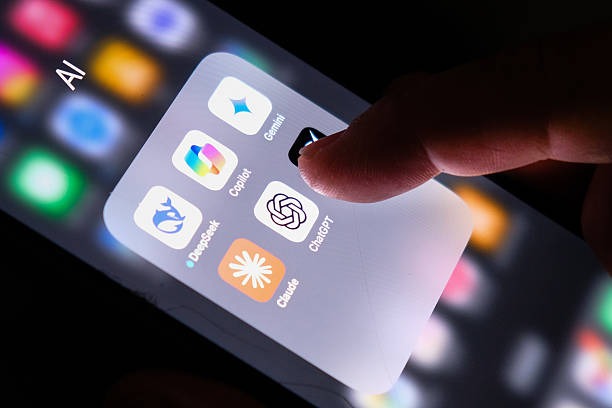
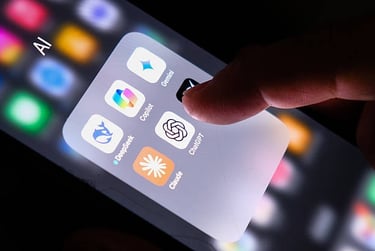
Generative AI and social media [Image: Getty Images]
We’re now seeing a new troublemaker on the horizon. Artificial Intelligence (AI) has made the conversation about online safety for young people far from easy.
Generative AI has brought a mixture of helpful and detrimental impacts to social media. AI has brought great changes, such as being adopted by numerous studying websites to support revision tools, and it is making free mental health apps more accessible and efficient than ever. Yet, discussing how beneficial AI is to young people and society remains a fragmented, gloomy debate.
Research from a 2025 report by The Youth Endowment Fund raised eyebrows when it found that one in four teenagers in England and Wales use AI for mental health support.
Meanwhile, social media feeds are seemingly becoming more unruly, being filled with content now widely dubbed as ‘AI slop’. Those lucky enough to be unfamiliar, examples range from bizarre, poorly AI-generated photos to videos that are becoming increasingly more difficult to distinguish between human and computer-made.
Online spaces are starting to feel like an impossible-to-navigate universe. So I ask, should we shut the door for under-16s, or begin regulating social media platforms more effectively?
The infamous Elon Musk’s X (formally known as twitter) made national headlines as its AI chatbot, Grok, was revealed to be able to create images of a sexual nature of other users. Images which would be publicly posted on the platform, simply by replying to a post and ‘tagging’ the robot.
Ofcom has begun investigating the legality of this after significant public backlash, including leaked chats revealing Labour MPs were calling for the platform's ban in the UK.
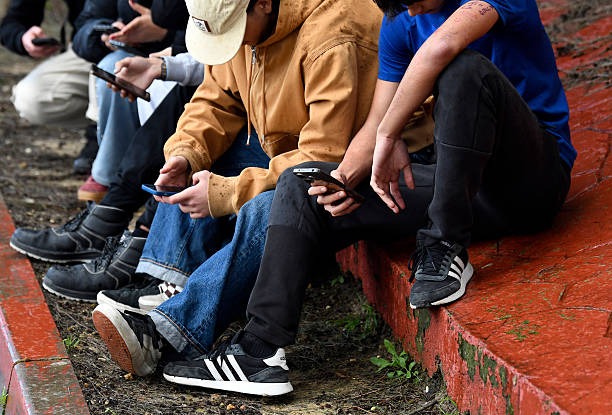
Young people on social media [Image: Getty Images]
Issues like these stem from the misbehaviour at the top before becoming the users. It is a difficult but vital process that politicians evaluate safety issues, recognising whether issues start with the users or the platform's regulation.
Blocking under-16s from using social media could do more harm than good. If a ban goes ahead, unless significant further action is taken, issues with online safety remain, most detrimentally among society's most vulnerable.
If the UK government begins to consider a social media ban for under-16s, we must learn from the mistakes Australia made. Critics of Australia’s social media ban raised concerns that should be reiterated louder. Mental health advocates warn that banning social media for under-16s could isolate thousands of young people who live in rural areas or are LGBTQ+, neurodivergent, or suffer from violence.
Another damning finding of the Youth Endowment Fund found that 9 out of 10 teenagers who experienced violence went online for support. A complete prevention of access to platforms such as YouTube, Instagram, and TikTok could derail under-16s who are socially and emotionally reliant on these services for support.
Both TikTok and the founder of youth-run news outlet 6 News Australia, Leonardo Puglisi, shared agreement that the ban felt “rushed” and warned of the impacts due to a lack of consultation with young people. The Molly Rose Foundation, a youth mental health charity, described a social media ban as “not the answer” and that it “penalises children for tech firms’ and successive governments’ failures to act”.
As publicly accessible services for young people are continuing to stumble and collapse due to a lack of funding, it seems the government could be looking for a seemingly easy way out rather than tackling the core of what is causing these problems, and going directly to those who are struggling.
There is no simple fix. From parents to politicians, understanding the complexity of the topic of social media safety is compulsory to tackling it.