
Policing at protests, Is it a good or bad thing?
We live in a society where protesting is a protected right under the European Convention on Human Rights (ECHR), but what good is a right if those meant to uphold that right are responding inadequately or often inconsistently?
POLITICSOPINION
Skye Morgan
2/10/20265 min read
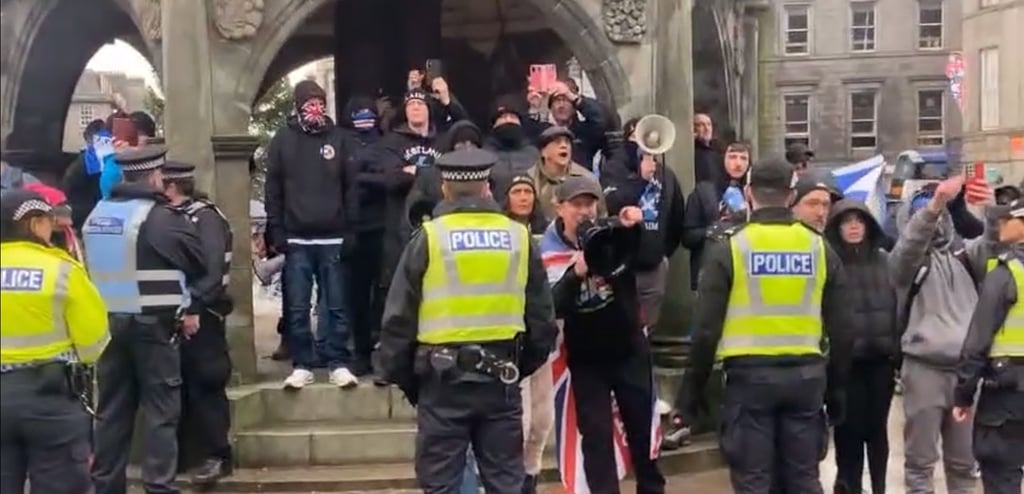
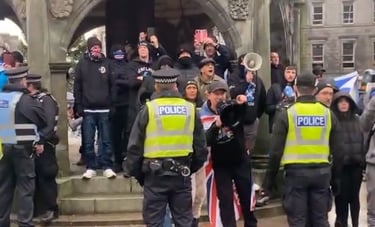
Anti-fascist counter protest [Image: Skye Morgan]
During a protest at Glasgow City Chambers, six young protesters from Trans Kids Deserve Better held a silent ‘read-in’ within the City Chambers in protest to proposed funding cuts to school librarians, it was reported that there were roughly 16-18 police officers on scene which many thought was overkill.
The activists partaking in the protest said during their five-and-a-half-hour silence, in protest to funding in school libraries being cut as they believe it will remove safe spaces for trans young people in schools, that the police within the building were trying to agitate and annoy the activists by crushing plastic water bottles near them and at one point try to scare the activists by sneaking up behind them when they were under cover trying to eat.
William (not his real name), young activist said: “They were very obviously trying to intimidate us. There were a good few inside, maybe six officers including the liaisons, and they were constantly making some sort of noise. They blocked us from the bathrooms, tried to look at anything we wrote to one another and stood close to us.
“One kept walking back and forth and squeezing an empty plastic bottle so it made a crackling sound, many of us have sensory issues and it was extremely uncomfortable especially as we could do nothing to block it out. We had to negotiate for the bathrooms which turned out to be broken, they wanted to have an officer in there with us.
“Outside, officers threatened the people protesting in solidarity that if we did anything inside that stepped out of line, those protesting outside would also get arrested.”
The group later held a second 'read-in' at the City Chambers, however the doors were locked and the police response was nowhere to be seen, why were they policed so differently?
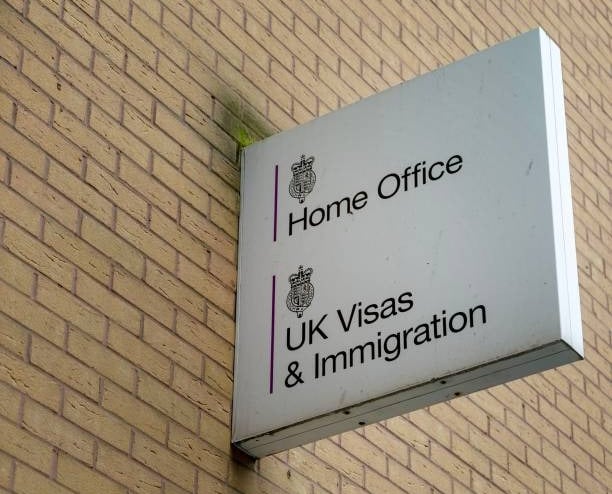
The home office are in charge or collecting crime data in the UK [Image: Getty Images]
So, what powers do the police have at protests?
Justice and policing are a part of Scotland's devolved powers which means some of the UK-wide laws such as the Public Order Act 2023 and Police, Crime, Sentencing and Courts Act 2022 do not apply in Scotland.
However, police still have powers under the Public Order Act 1986 which give police two main powers under Section 12 and Section 14.
Section 12 allows police to impose conditions on a march or parade if they reasonably believe it may result in serious public disorder, serious damage to property, serious disruption to the life of the community, or if the purpose is intimidation.
Section 14 permits restrictions on static demonstrations only under the same high threshold: serious public disorder, serious damage or serious disruption, or where intimidation is intended. Conditions may include limiting the number of participants, location or duration of the demonstration.
Police also have the powers to restrict traffic and close roads as needed. Issue conditions in advance or on the spot based on risk assessments. Arrest individuals who breach these conditions or commit criminal acts including violent disorder or aggravated trespass under the Criminal Justice and Licensing (Scotland) Act 2010.
But many protesters feel that police abuse these rights

'Do you think police help at protests?'
In the summer of 2025, we saw a rise of right-wing marches, Tommy Robinson fans and anti-immigration attacks. One of the biggest anti-immigration protests in Falkirk, outside the Cladhan Hotel in the city centre.
During a fascist protest in Aberdeen, they were seen doing nazi salutes and holding a banner saying “NONE IN ALL OUT, STOP THE BOATS, LISTEN TO THE BRITISH PEOPLE”
Activists on the scene also reported them shouting rape threats while the police were standing right in front.

John (not his real name), activist and protester, said: “I don’t think police help at protests. The most use I’ve had from police being at protests is providing a buffer for a period of time, but they always leave or allow certain amounts of violence to happen especially at anti-fascist protests where they either kettle us very closely and let the fascists throw stuff at us or leave after a while and let us fight it out.”
Reddit user, FootCheeseParmesan said: “From personal experience, the left are over-policed (in terms of kettling, intimidation, physical force and arrests and the right are often left alone (principally because the police are obviously sympathetic to their views).
“Left wing demonstrators are regularly coached not to bring personal identifiers to protests because they will usually get targeted, whereas the right will stream gleefully online.”
We reached out to Police Scotland for official comment, however, on a public Reddit thread, an active police officer responded to the post.
PuritanicalGoat, Police officer said: “In general, most officers cover a couple types of cordons at officer safety training. These are used for general protests/walks you see.
“Then there are public order officers who get a lot more training and cover a wider range of tactics. There are different levels to their deployment ranging from normal uniform to the full ‘riot cop’ with helmets and overalls.
“The policy for ALL events, whether it be a protest, a walk, a city centre enhanced policing model etc are always to facilitate a peaceful event, provide a proportionate response to any events and to facilitate a return to normality as soon as possible.”

"policing of these protests has become 'increasingly intimidatory, violent and unpredictable'" [Image: greens.scot]
Maggie Chapman, Scottish Green Party MSP for North East Scotland submitted a standard motion titled “From Scotland to Gaza Report, Recognising the Overpolicing of Pro-Palestine Protest.” Within the motion she said: “That the Parliament acknowledges the Scottish Community & Activist Legal Project (SCALP) and Network for Police Monitoring’s (Netpol) report, From Scotland to Gaza, published on 23 October 2025, which offers analysis of policing pro-Palestine solidarity protests; is concerned by the report’s findings that policing of these protests has become ‘increasingly intimidatory, violent and unpredictable’ in the period October 2023 to October 2024.”
The motion was submitted on 5 November 2025 but was not successful and the current status of the motion is ‘Fallen’.
Some politicians are advocating for those groups taking direct action while others are more interested in restricting protesting rights and would rather control communities who ‘step out of line’.
The policing at protests is inconsistent, with children being harassed by a brigade of officers to those protecting the rights of migrants being over policed while those holding up Nazi salutes are being left to roam the streets of Scotland. The powers of policing needs to be made clear and any misconduct enforced.