Is the ban on puberty blockers still affecting transgender young people?
Luna Simpson-Green, student and transgender woman said: “it's a purely motivated, transphobic action and I think it's ridiculous.”
POLITICSHUMAN INTEREST
Skye Morgan
12/2/20258 min read
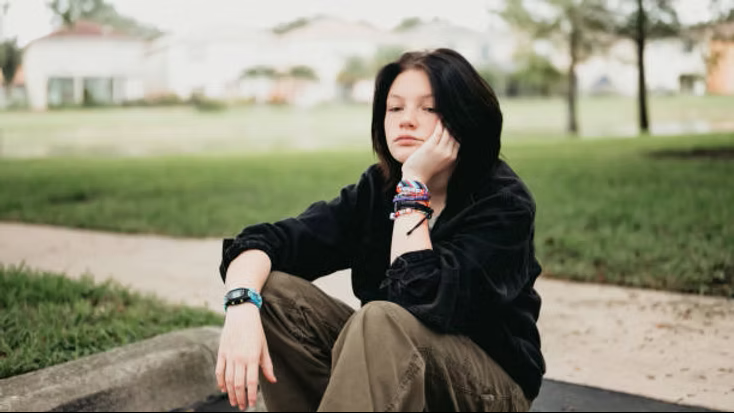

In the May of 2024, emergency legislation was passed by the Conservative government to ban prescribing GnRH, or puberty blockers, for the treatment of gender dysphoria/incongruence. In the December of 2024, the Labour government then made that ban indefinite.
Gender incongruence is the state of having a gender identity that does not correspond to a person’s assigned sex at birth. It is primarily felt by people who identify as transgender, and it can lead to gender dysphoria.
Gender dysphoria describes a sense of distress or unease about a person’s gender identity, in some cases it can cause a person to experience anxiety, depression and lead to other issues such as self-harm and suicidal ideation.
Gender dysphoria and gender incongruence are similar but have their differences. Gender incongruence is a mismatch between a person’s gender and assigned sex at birth, without necessarily involving distress or unease about it.
Luna Simpson-Green, student and transgender young person, said: “I was diagnosed with gender incongruence rather than gender dysphoria so it’s less about a feeling of mental health or depression, it's more the fact I am proud of who I am as a woman”
Wes Streeting, Secretary for Health and Social Care, said: “While the temporary ban was in place, I asked the Commission on Human Medicines to look at the current environment for prescribing puberty blockers, and we launched a targeted consultation.”
The Cass Review was an independent review of gender identity services for children and young people funded by NHS England. The role of the review was to look into the current model and how it could be improved.
On The Cass Review website, there is a frequently asked questions section, one question asked if the review recommends banning puberty blockers.
The website said: “No. Puberty blocker medications are used to address a number of different conditions. The Review has considered the evidence in relation to safety and efficacy (clinical benefit) of the medications for use in young people with gender incongruence/gender dysphoria.”
Why are the government using the review, which has admitted it does not recommend banning puberty blockers, as evidence to ban them?
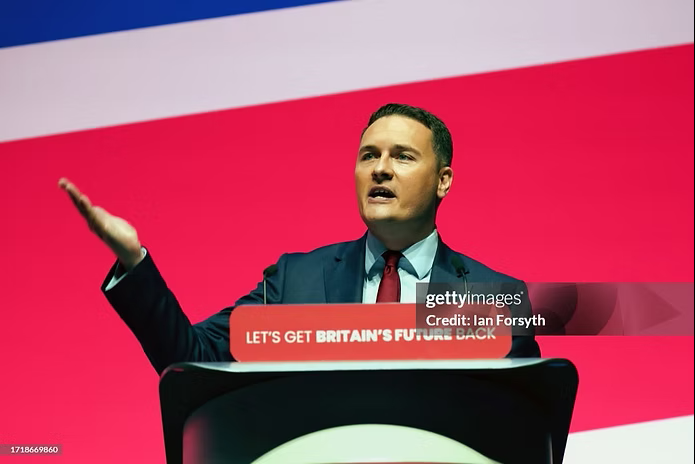
Wes STREETING, CABINET sec for health and social care Image: Getty Images
Puberty blockers were developed in the early 1980s but became more mainstream in the 1990s. It was used primarily to treat precocious puberty however in the 1990s they realised it could also be used to help transgender adolescents by slowing or stopping puberty.
Simpson-Green said: “I didn’t know the ban wasn’t in place for cisgender young people. Finding that out, it’s a purely motivated, transphobic action and I think it's ridiculous.”
According to Wes Streeting, puberty blockers present ‘an unacceptable safety risk’ to young people.
Despite that, the ban was only in place for transgender young people under 18, meaning that cisgender young people as young as eight could still be accessing puberty blockers.
Roybn McAllister, NHS Pharmacist, said: “A lot of the reason why medicines aren’t deemed safe in young people is because it’s not deemed as ethical to do trials on young people.
“It’s not because there’s no evidence there, it’s because pharmaceutical companies won’t test on young people.”
An LGBT Youth Scotland report found that 66% of transgender participants have had suicidal thoughts and/or attempted suicide, it also found that 58% of transgender participants engaged in self-harm as opposed to 34% of cisgender people experiencing suicidal thoughts and/or attempts and 28% of cisgender participants engaging in self-harm.
A study by van der Miesen on transgender adolescents before and after gender affirming care found that before getting medical treatment, adolescents showed more internalising problems and reported increased self-harm and suicidality as well as poorer peer relations.
The overall result of the study had shown after receiving gender affirming care, including puberty blockers, showed better psychological functioning compared to cisgender peers from the general public.
Simpson-Green said: “When I first heard the news about the ban, I was really shocked and horrified that they [the Government] can carry out an action like preventing healthcare for [trans] young people.”
The UK government’s website on puberty blockers, it said: “They are licensed only for use in young children (for precocious puberty) or older adults (for certain cancers).”
Precocious puberty is when a child starts pubertal development before the general age puberty begins. For girls that age is eight years old and for boys that age is nine years old.
There isn’t much known about why precocious puberty begins but some of the reasons are, due to a problem in the brain such as a brain tumour, result of an infection, surgery or radiotherapy or a genetic disorder such as McCune-Albright syndrome.
Puberty blockers are still given to cisgender young people as young at eight years old. This ban was just for the purposes of gender dysphoria/incongruence.
On the Government’s website it states that puberty blockers are licensed only for use in young children for precocious puberty or older adults for certain cancers.
Puberty blockers being used to treat gender dysphoria/incongruence was prescribed ‘off-label’. Off-label drug use is the practice of prescribing a drug for a different purpose than what the Medicines and Healthcare products Regulatory Agency (MHRA) approved.
One example of other drugs being used off-label is sertraline. Its label purpose is to relieve symptoms of depression, but it has also been shown to help treat fibromyalgia.
Another example of drugs being used off-label is Seroquel. Seroquel is primarily used to treat schizophrenia in adults and children 13 and over however, it is also prescribed off-label to help treat insomnia, anxiety and depression despite limited supporting evidence for the off-label uses it is still prescribed.
The MHRA is a government agency that regulates pharmaceuticals, blood establishments, advanced therapy medical products and medical devices in the UK. It is the UK’s version of the Food and Drug Administration (FDA).
The MHRA does not regulate food, veterinary medicines or consumer products like cosmetics as opposed to the FDA that regulate a wide range of products for human and animal use, cosmetics and tobacco products.
They are both responsible for licensing medications in their respective countries based on the results of clinical trials.
Although the similarities are there, the MHRA and FDA have different legal frameworks and consultation processes which can create challenges for the pharmaceutical companies which need to cater to the respective organisations.
During the research for The Cass Review, there was a summary report from lived experience focus groups.
One young person said: “We ask for blockers because we want time before deciding about HRT or typical puberty.”
Although transgender young people usually want to go straight onto Hormone Replacement Therapy (HRT) but with the choice of going on puberty blockers first would allow young people to think about their gender journey before making big decisions such as HRT.
HRT is the use of sex hormones such as oestrogen and testosterone to alter your secondary sex characteristics. Transgender people usually take it to help them achieve gender euphoria and the perception of their desired gender.
Within the review those views from the focus group of young people seem to largely be ignored. Seeing minimal mention of it in the review out-with quotes, with it being mentioned around 14 times.
Scotland has done a lot to improve transgender rights, having the Gender Recognition Reform (GRR) act passing, which was then subsequently blocked by Westminster.
The GRR was a bill that passed through Scottish Parliament that would make the process of getting a gender recognition certificate easier for transgender individuals. The bill set out who could apply for a gender recognition certificate, how to make an application and the grounds an application can be granted.
It also makes provisions about the different types of gender recognition certificates that may be issued in different circumstances (“full” or “interim”), appeals and reviews of decisions to grant or not grant a gender recognition certificate and revocation of a gender recognition certificate and offences in connection with false information being provided.
As mentioned, it was blocked under section 35 of the Scotland act that allows the Secretary of State to intervene where the Scottish Parliament has passed a bill before it’s submitted for Royal Assent.
Healthcare is a devolved power within Scotland so why aren’t the Scottish government doing anything about it?
McAllister said: “I don’t think the ban is fair. I think that the queer community and especially the trans and non-binary community are being faced with the most horrendous time at the moment.
“This has been a catalyst to really demonise these medications and the benefit they can have to people.”
With all this uncertainty in politics about transgender rights, how much transgender people feel
Simpson-Green said: “I am scared for my rights at the moment. With a lot of new regulations and legislation, it’s put a sense of fear and reality into me that we’re at the same level of protection as we were 50 years ago.
“Kier Starmer agreeing with the Supreme court decision, its put a lot of fear, confusion and distrust
“Who are we meant to look up to if our own government doesn’t want us to live our lives?”
Image: Getty Images
Although the similarities are there, the MHRA and FDA have different legal frameworks and consultation processes which can create challenges for the pharmaceutical companies which need to cater to the respective organisations.
During the research for The Cass Review, there was a summary report from lived experience focus groups.
One young person said: “We ask for blockers because we want time before deciding about HRT or typical puberty.”
Although transgender young people usually want to go straight onto Hormone Replacement Therapy (HRT) but with the choice of going on puberty blockers first would allow young people to think about their gender journey before making big decisions such as HRT.
HRT is the use of sex hormones such as oestrogen and testosterone to alter your secondary sex characteristics. Transgender people usually take it to help them achieve gender euphoria and the perception of their desired gender.
Within the review those views from the focus group of young people seem to largely be ignored. Seeing minimal mention of it in the review out-with quotes, with it being mentioned around 14 times.
Scotland has done a lot to improve transgender rights, having the Gender Recognition Reform (GRR) act passing, which was then subsequently blocked by Westminster.
The GRR was a bill that passed through Scottish Parliament that would make the process of getting a gender recognition certificate easier for transgender individuals. The bill set out who could apply for a gender recognition certificate, how to make an application and the grounds an application can be granted.
It also makes provisions about the different types of gender recongnition certificates that may be issued in different circumstances (“full” or “interim”), appeals and reviews of decisions to grant or not grant a gender recognition certificate and revocation of a gender recognition certificate and offences in connection with false information being provided.
As mentioned, it was blocked under section 35 of the Scotland act that allows the Secretary of State to intervene where the Scottish Parliament has passed a bill before it’s submitted for Royal Assent.
Healthcare is a devolved power within Scotland so why aren’t the Scottish government doing anything about it?
McAllister said: “I don’t think the ban is fair. I think that the queer community and especially the trans and non-binary community are being faced with the most horrendous time at the moment.
“This has been a catalyst to really demonise these medications and the benefit they can have to people.”
With all this uncertainty in politics about transgender rights, how much transgender people feel
Simpson-Green said: “I am scared for my rights at the moment. With a lot of new regulations and legislation, it’s put a sense of fear and reality into me that we’re at the same level of protection as we were 50 years ago.
“Kier Starmer agreeing with the Supreme court decision, its put a lot of fear, confusion and distrust
“Who are we meant to look up to if our own government doesn’t want us to live our lives?”