Meet the woman who’s been working with LGBTQ+ young people for over 25 years
For more than 25 years, LGBTQ+ rights have been pushed back and forth by politicians, organisations, and public opinion. Through it all, one youth worker, now a Youth Work Manager, has been there on the frontline, supporting young people, creating safe spaces, and helping shape the community as we know it today.
HUMAN INTEREST
Skye Morgan
12/2/20253 min read
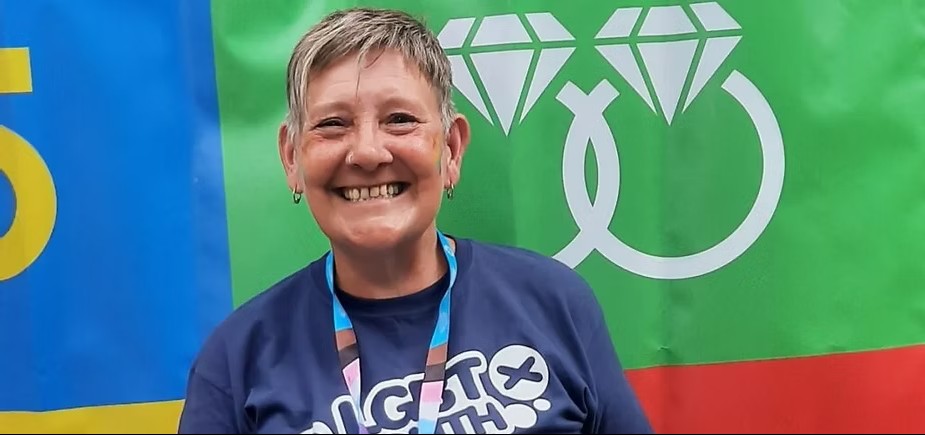
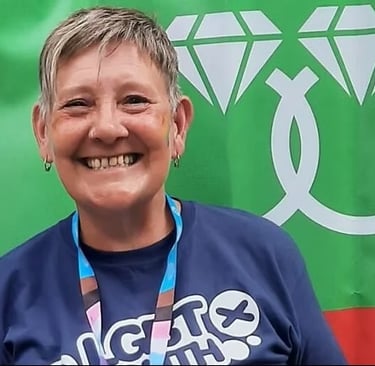
Ann Marriott, Youth Work Manager at LGBT Youth Scotland
For more than 25 years, LGBTQ+ rights have been pushed back and forth by politicians, organisations, and public opinion. Through it all, one youth worker, now a Youth Work Manager, has been there on the frontline, supporting young people, creating safe spaces, and helping shape the community as we know it today.
Ann Marriott, Youth Work Manager at LGBT Youth Scotland, began her journey as a volunteer back in 2000, when the organisation was still called Stonewall Youth Project.
“I remember going along to my first group and being really nervous,” Ann said. “There wasn’t really a clear role at first, you just turned up and shadowed, but that didn’t quite work for me. So, I came up with my own project idea.”
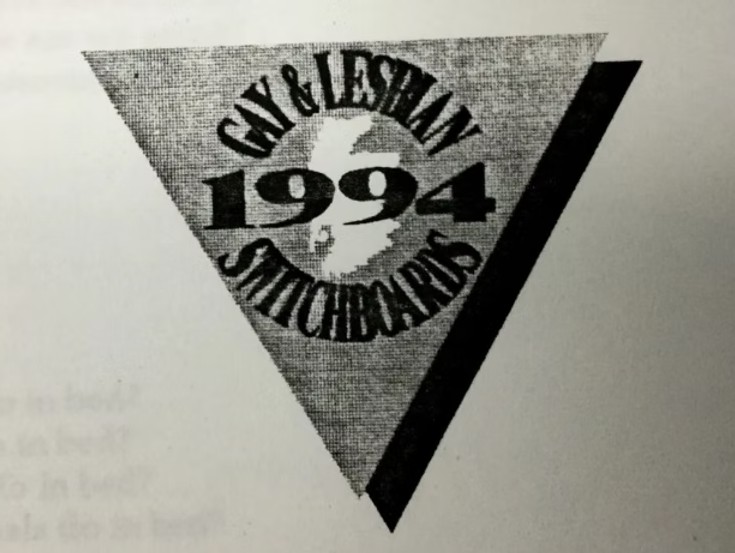
Before joining the project, Ann trained with the Edinburgh and Lothian Lesbian and Gay Switchboard, then already trans-inclusive, and loved it.
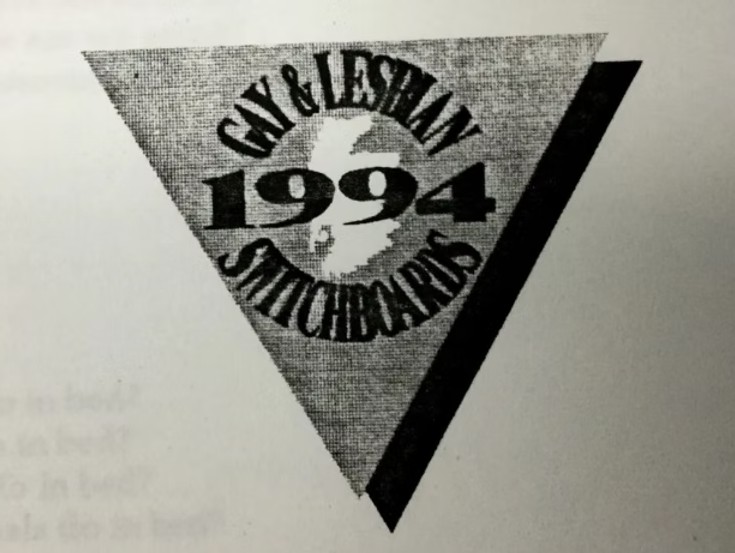
Gay and Lesbian Switchboard, 1994
(image: lgbthealth.org)
“It was a ten-week programme where you learned different skills, then did practice runs taking calls as a support helper. Once I passed, I started taking real calls in the switchboard office, a secret location at the time, because in 1999 it was still a very difficult climate for queer people.
“We had a youth line too, the idea was that young people could speak to other young people for support. Ten of them signed up for every session, and while none ended up working the phone line, they all grew in confidence and went on to jobs and university. That was a big success in itself.”
By the end of 2000, a sessional youth worker role opened up, and Ann jumped at the chance.
“We put on amazing events for young women, always trans inclusive, and before long I was working full time.”
From there, Ann helped grow with the organisation from a tiny local project into a national one.
“We started off sharing a desk at Tollcross Community Centre,” she laughs. “There were just a few of us, some staff, a couple of volunteers, and now we’re a national organisation. It felt like we grew so fast.”
That growth was driven by necessity.
“So many queer people were moving to cities because rural communities just weren’t safe, especially under Section 28. We realised we had to expand—so we set up services in Glasgow, Dumfries and Galloway, Borders, Falkirk, Stirling, Perth, Inverness, and Ayrshire.”
After more than two decades in the sector, how does Ann reflect on how LGBTQ+ rights have changed?
“Honestly, it was awful back then. Section 28 came in in 1987, and I saw the horrors first-hand. When I moved to Edinburgh, we started training police officers across Lothian and Borders. Some were brilliant, but others weren’t. It was still seen as acceptable to raid Carlton Hill looking for men being with other men.”
But progress came too.
“Working with the Equality Network on the Gender Recognition Act was amazing. Hate crime legislation came in 2009, the Equality Act in 2010, and Section 28 was finally repealed after an incredible campaign. But even then, teachers didn’t always realise they could talk about same-sex relationships or gender inclusion.”
Today, as trans rights come under renewed attack, some fear we’re sliding backwards.
“I don’t think we’ll go back to those days,” Ann said firmly. “So many more people are out now - scientists, biologists, people across every field, standing up and saying gender isn’t binary. We’ve got organisations like the Good Law Project in our corner, and the EHRC quietly taking down harmful guidance. The Cass Review is being challenged. We didn’t have that kind of support before.”
“Our community has changed for the better. The closet is far too small for us now, we’re bigger, louder, more visible, and we’ll get through this.”
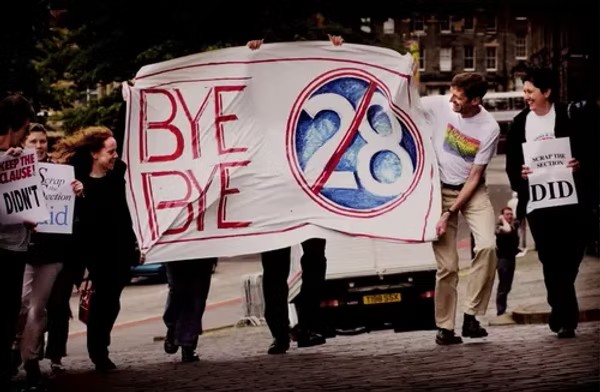
Section 28
(image: Equality-Network.org
So, after more than 25 years, what keeps Ann going?
“People might not believe me, but every single day I come to work, I smile,” she said. “There’s not a single day where something doesn’t make me proud—or where I don’t see someone’s life get just a tiny bit better.”
“I’ve been doing this so long that some of the people I now work with used to come to our youth groups as young people. I’m like a proud mum—or granny—or great-granny!”
“I just love my job.”